Turtles in South Carolina
20 species of turtles have a mapped range in South Carolina. 4 are mapped across the whole state, among them the Eastern Box Turtle, the Snapping Turtle and the River Cooter.
The most restricted is the Gopher Tortoise, mapped in 3% of the state.
The heaviest is the Leatherback Sea Turtle, at 2,094 lb (950 kg); the lightest is the Bog Turtle, at 8.6 oz (243 g).
The most species are mapped in Jasper County (18); the fewest in Abbeville County (7).
Open-licence records in the state (2,294 of them) peak in June and are fewest in November.
The most often recorded is the Pond Slider, with 709 open-licence records in the state.
By the trait records, 12 are active by day, 6 are active by day and by night and 2 are active at night.
They belong to 7 families; the largest here is Emydidae, with 8 species.
- 7 to 8
- 9 to 11
- 12 to 13
- 14 to 16
- 17 to 18
| Species | Size | Share of South Carolina | Active | Records | |
|---|---|---|---|---|---|
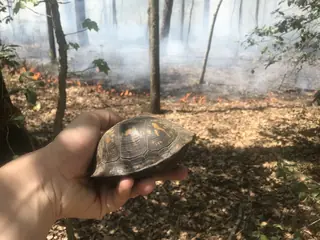 | Eastern Box Turtle Terrapene carolina Emydidae | 2.4 lb (1.1 kg) | all | day | 343 |
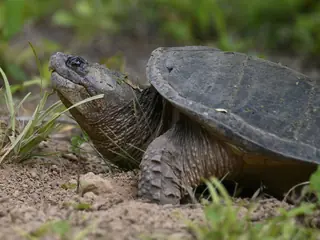 | Snapping Turtle Chelydra serpentina Chelydridae | 20 in (500 mm) snout to vent | all | night | 99 |
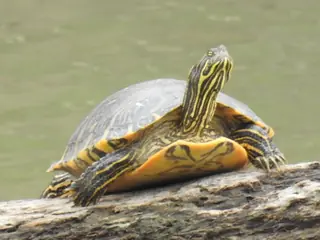 | River Cooter Pseudemys concinna Emydidae | 13 in (330 mm) snout to vent | all | day | 121 |
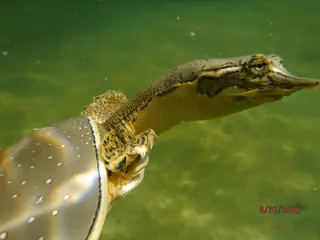 | Spiny Softshell Apalone spinifera Trionychidae | 2.1 in (54 mm) snout to vent | all | day | 73 |
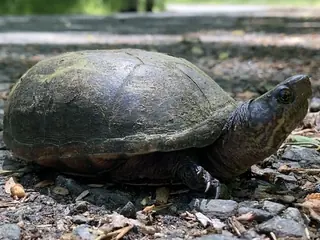 | Eastern Mud Turtle Kinosternon subrubrum Kinosternidae | 4.0 in (102 mm) snout to vent | 99% | day | 354 |
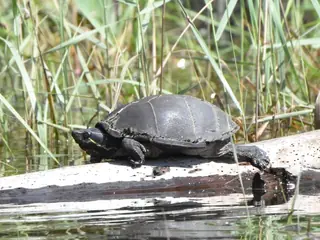 | Eastern Musk Turtle Sternotherus odoratus Kinosternidae | 5.5 in (140 mm) snout to vent | 98% | night | 324 |
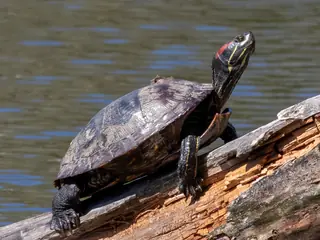 | Pond Slider Trachemys scripta Emydidae | 10 in (264 mm) snout to vent | 78% | day | 709 |
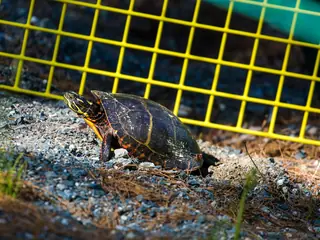 | Painted Turtle Chrysemys picta Emydidae | 9.8 in (250 mm) snout to vent | 67% | day | 183 |
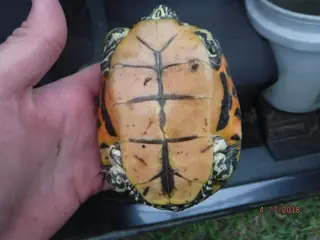 | Chicken Turtle Deirochelys reticularia Emydidae | 10 in (260 mm) snout to vent | 66% | day and night | 62 |
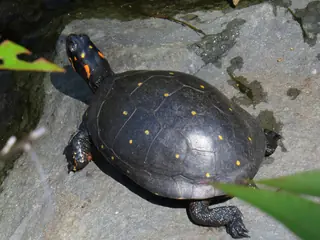 | Spotted Turtle Clemmys guttata Emydidae | 4.7 in (120 mm) snout to vent | 66% | day and night | 50 |
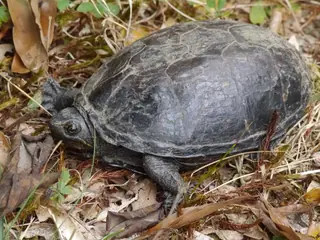 | Striped Mud Turtle Kinosternon baurii Kinosternidae | 4.7 in (120 mm) snout to vent | 51% | day | 33 |
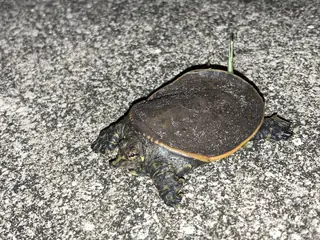 | Florida Softshell Apalone ferox Trionychidae | 2.5 ft (760 mm) snout to vent | 17% | day | 22 |
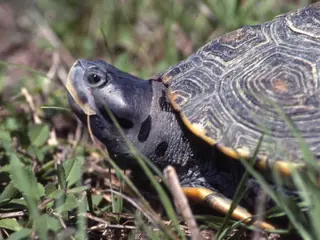 | Diamond-backed Terrapin Malaclemys terrapin Emydidae | 7.5 in (190 mm) snout to vent | 13% | day | 65 |
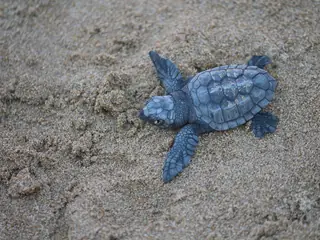 | Loggerhead Sea Turtle Caretta caretta Cheloniidae | 7.0 ft (2,130 mm) snout to vent | 9% | day and night | 191 |
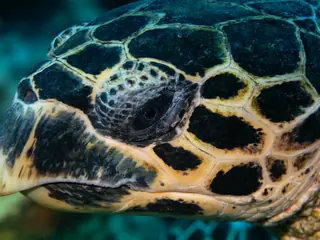 | Hawksbill Sea Turtle Eretmochelys imbricata Cheloniidae | 3.3 ft (1,000 mm) snout to vent | 6% | day and night | |
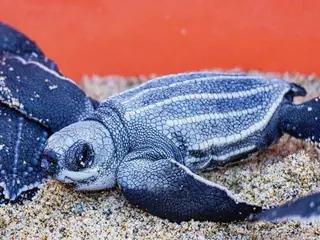 | Leatherback Sea Turtle Dermochelys coriacea Dermochelyidae | 8.9 ft (2,700 mm) snout to vent | 5% | day and night | 2 |
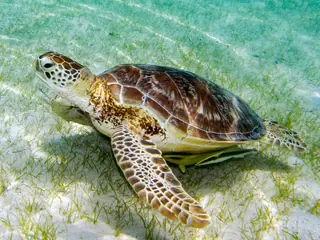 | Green Sea Turtle Chelonia mydas Cheloniidae | 4.9 ft (1,500 mm) snout to vent | 5% | day and night | 4 |
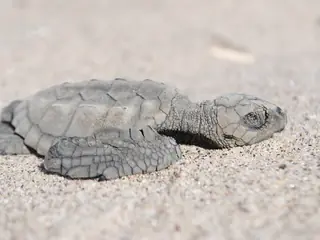 | Kemp's Ridley Sea Turtle Lepidochelys kempii Cheloniidae | 2.5 ft (750 mm) snout to vent | 4% | day | 3 |
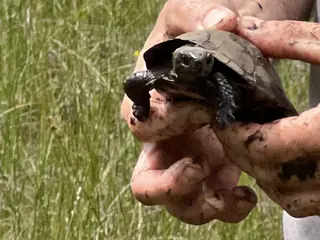 | Bog Turtle Glyptemys muhlenbergii Emydidae | 3.7 in (94 mm) snout to vent | 3% | day | |
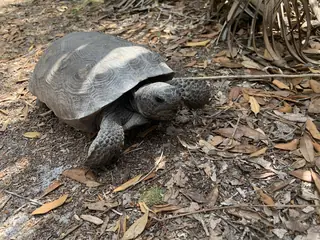 | Gopher Tortoise Gopherus polyphemus Testudinidae | 11 in (280 mm) snout to vent | 3% | day | 27 |
Share of South Carolina is the part of the state inside the species' USGS range map. Size is the largest on record where the source gives a maximum, otherwise a typical adult. Records are open-licence observations and specimens in the state; a blank means none were counted, not that the species is absent.
More South Carolina lists
Other groups in South Carolina
Turtles in nearby states
Sources
- GBIF Backbone Taxonomy. CC BY 4.0. Read 2026-11-15.
- GBIF occurrence records under CC0 and CC BY 4.0. CC0 and CC BY 4.0 per record. Read 2026-11-15.
- ReptTraits v1.2. CC BY 4.0. Read 2026-11-15.
- US Census Bureau cartographic boundary files 2023. Public domain (US Census Bureau). Read 2026-11-15.
- USGS GAP 12-digit hydrologic unit range units. Public domain (USGS). Read 2026-11-15.
- USGS Gap Analysis Project Species Range Maps CONUS_2001. Public domain (USGS). Read 2026-11-15.
- iNaturalist photographs under CC0 and CC BY. CC0 and CC BY per photograph. Read 2026-11-15.
How each figure is derived is set out on the methods page.