Spiders in Idaho
12 species of spiders have ten or more open-licence records in three or more years in Idaho, and 1 of them is venomous. The venomous species is the Western Black Widow. It belongs to the genera of the two venomous spiders the CDC names for the United States (the black widow and the brown recluse).
Open-licence records in the state that carry a month (342 of them) peak in May and are fewest in November.
The most often recorded is the Bold Jumper, with 80 open-licence records in the state.
By kind, 4 are jumping spiders, 2 are orb-weaver spiders, 1 is a crab spider and 1 is a widow spider.
They belong to 7 families; the largest here is Salticidae, with 4 species.
The list rests on 554 open-licence records of spiders in the state; 60 further species have records there but fewer than ten, or in fewer than three years.
| Species | Open records | Years | Peak month | |
|---|---|---|---|---|
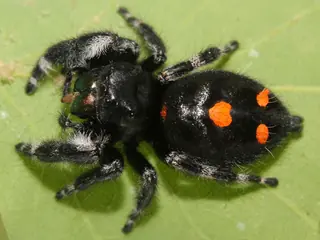 | Bold Jumper Phidippus audax Salticidae | 80 | 11 | April |
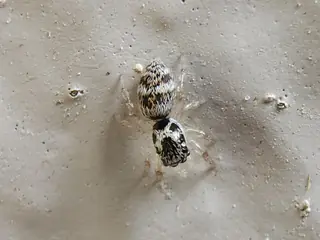 | Zebra Jumper Salticus scenicus Salticidae | 60 | 11 | June |
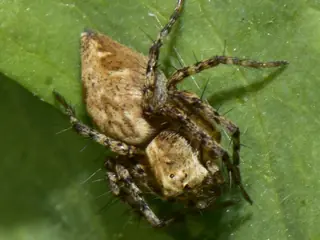 | Western Lynx Spider Oxyopes scalaris Oxyopidae | 53 | 11 | May |
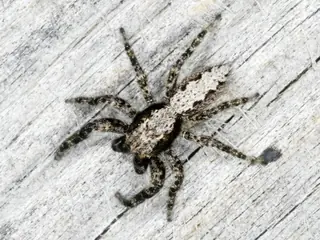 | California Flattened Jumping Spider Platycryptus californicus Salticidae | 47 | 12 | June |
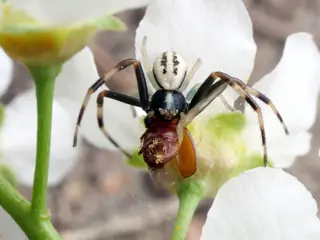 | Goldenrod Crab Spider Misumena vatia Thomisidae | 44 | 11 | July |
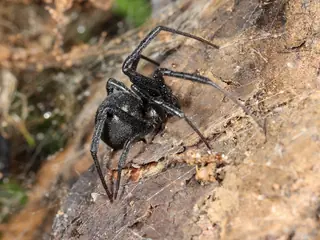 | Western Black Widow venomous Latrodectus hesperus Theridiidae | 20 | 8 | |
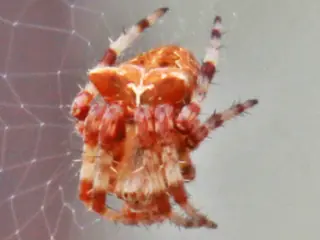 | Cat-Faced Spider Araneus gemmoides Araneidae | 14 | 8 | |
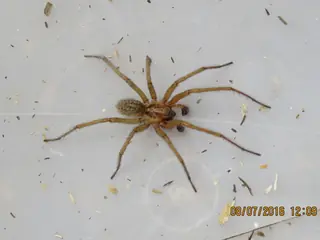 | Hobo Spider Eratigena agrestis Agelenidae | 14 | 8 | |
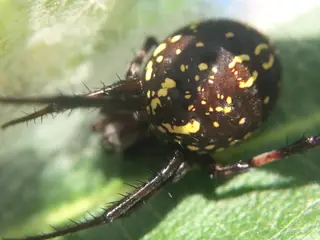 | Western Spotted Orbweaver Neoscona oaxacensis Araneidae | 14 | 7 | |
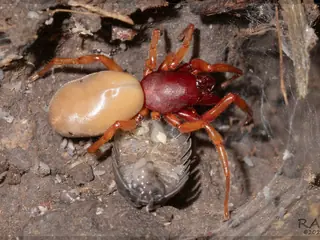 | Slater Spider Dysdera crocata Dysderidae | 11 | 6 | |
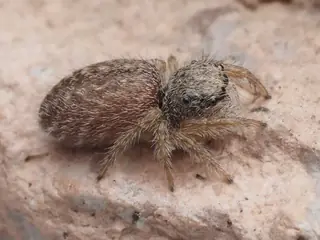 | Phidippus octopunctatus Phidippus octopunctatus Salticidae | 10 | 5 | |
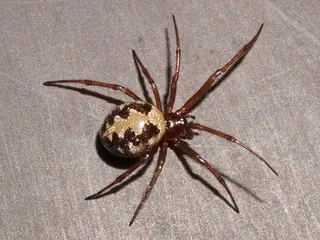 | Triangulate Combfoot Steatoda triangulosa Theridiidae | 10 | 7 |
A species is listed with ten or more open-licence records in Idaho across three or more years since 2000. Records are observations and specimens under CC0 and CC BY licences; they follow observers as well as animals, so a species that is missing is not shown to be absent.
More Idaho lists
Other groups in Idaho
Spiders in nearby states
Sources
- CDC NIOSH venomous snakes and venomous spiders pages. Public domain (CDC). Read 2026-11-15.
- Catalogue of Life (via GBIF vernacular names). CC BY 4.0. Read 2026-11-16.
- GBIF Backbone Taxonomy. CC BY 4.0. Read 2026-11-15.
- GBIF occurrence records under CC0 and CC BY 4.0. CC0 and CC BY 4.0 per record. Read 2026-11-16.
- Integrated Taxonomic Information System. CC0. Read 2026-11-15.
- iNaturalist photographs under CC0 and CC BY. CC0 and CC BY per photograph. Read 2026-11-15.
How each figure is derived is set out on the methods page.