Lizards in Utah
24 species of lizards have a mapped range in Utah. The most widespread is the Common Sagebrush Lizard, mapped across all of the state.
The most restricted is the Long-tailed Brush Lizard, mapped in under 1% of the state.
The heaviest is the Gila Monster, at 2.2 lb (1.0 kg); the lightest is the Desert Night Lizard, at 0.2 oz (6.8 g).
The most species are mapped in Washington County (21); the fewest in Rich County (3).
Open-licence records in the state that carry a month (12,265 of them) peak in May and are fewest in December.
The most often recorded is the Common Side-blotched Lizard, with 4,091 open-licence records in the state.
By the trait records, 21 are active by day, 2 are active by day and by night and 1 is active at night.
They belong to 8 families; the largest here is Phrynosomatidae, with 12 species.
- 3 to 6
- 7 to 8
- 9 to 11
- 12 to 14
- 15 to 21
| Species | Size | Share of Utah | Active | Records | |
|---|---|---|---|---|---|
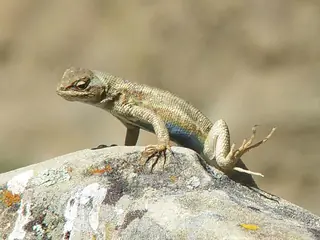 | Common Sagebrush Lizard Sceloporus graciosus Phrynosomatidae | 3.5 in (89 mm) snout to vent | all | day | 2,627 |
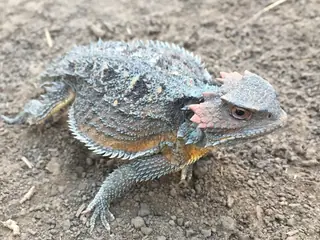 | Greater Short-horned Lizard Phrynosoma hernandesi Phrynosomatidae | 4.9 in (125 mm) snout to vent | all | day | 467 |
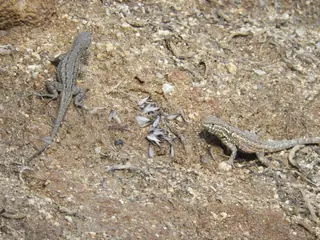 | Common Side-blotched Lizard Uta stansburiana Phrynosomatidae | 3.0 in (77 mm) snout to vent | 94% | day | 4,091 |
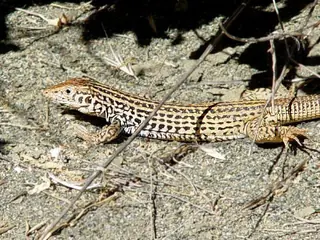 | Tiger Whiptail Aspidoscelis tigris Teiidae | 5.4 in (137 mm) snout to vent | 87% | day | 1,983 |
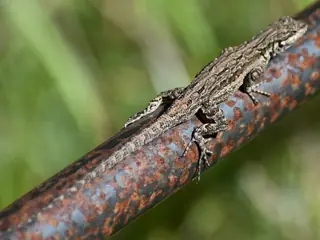 | Ornate Tree Lizard Urosaurus ornatus Phrynosomatidae | 2.7 in (69 mm) snout to vent | 70% | day | 467 |
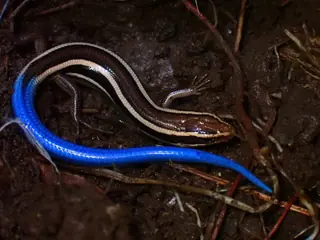 | Western Skink Plestiodon skiltonianus Scincidae | 3.4 in (86 mm) snout to vent | 69% | day | 56 |
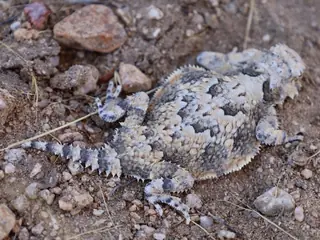 | Desert Horned Lizard Phrynosoma platyrhinos Phrynosomatidae | 3.7 in (95 mm) snout to vent | 62% | day | 390 |
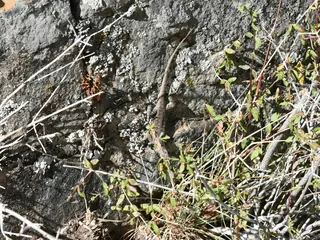 | Plateau Fence Lizard Sceloporus tristichus Phrynosomatidae | 3.7 in (95 mm) snout to vent | 58% | day | 1,098 |
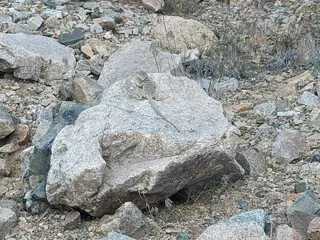 | Great Basin Collared Lizard Crotaphytus bicinctores Crotaphytidae | 4.6 in (117 mm) snout to vent | 58% | day | 333 |
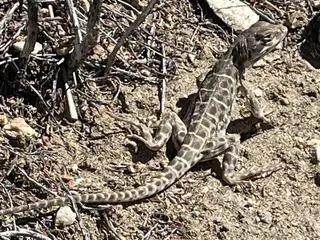 | Long-nosed Leopard Lizard Gambelia wislizenii Crotaphytidae | 5.7 in (146 mm) snout to vent | 54% | day | 513 |
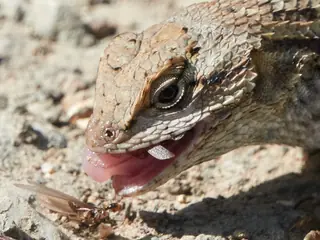 | Western Fence Lizard Sceloporus occidentalis Phrynosomatidae | 3.9 in (99 mm) snout to vent | 36% | day | 223 |
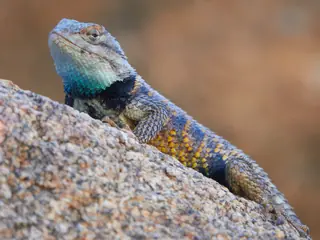 | Desert Spiny Lizard Sceloporus magister Phrynosomatidae | 5.6 in (142 mm) snout to vent | 31% | day | 514 |
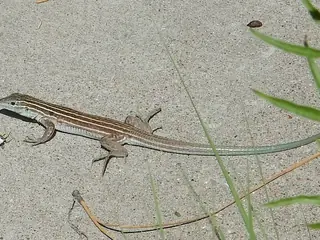 | Plateau Striped Whiptail Aspidoscelis velox Teiidae | 3.5 in (89 mm) snout to vent | 29% | day | 246 |
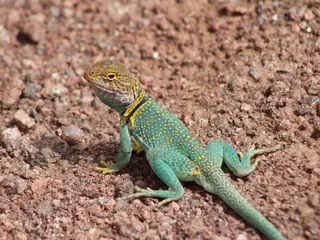 | Eastern Collared Lizard Crotaphytus collaris Crotaphytidae | 5.2 in (131 mm) snout to vent | 22% | day | 208 |
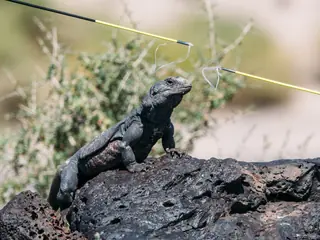 | Common Chuckwalla Sauromalus ater Iguanidae | 9.1 in (230 mm) snout to vent | 13% | day | 98 |
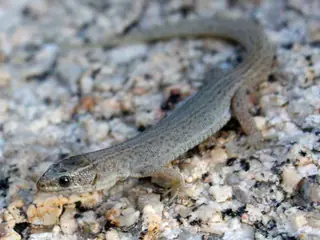 | Desert Night Lizard Xantusia vigilis Xantusiidae | 2.8 in (70 mm) snout to vent | 10% | day and night | 79 |
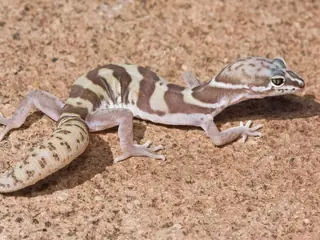 | Western Banded Gecko Coleonyx variegatus Eublepharidae | 3.0 in (77 mm) snout to vent | 7% | night | 62 |
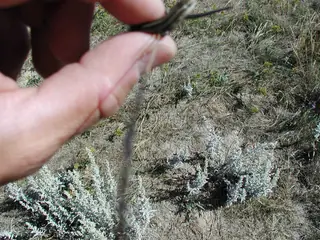 | Many-lined Skink Plestiodon multivirgatus Scincidae | 3.0 in (76 mm) snout to vent | 7% | day | 8 |
| Yellow-backed Spiny Lizard Sceloporus uniformis Phrynosomatidae | 5.5 in (140 mm) snout to vent | 7% | day | 176 | |
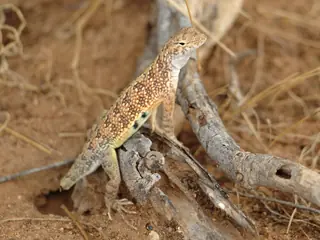 | Common Lesser Earless Lizard Holbrookia maculata Phrynosomatidae | 3.0 in (75 mm) snout to vent | 6% | day | 12 |
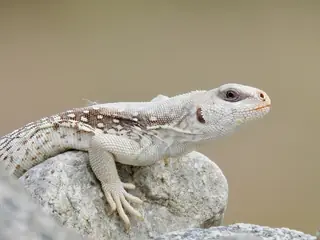 | Desert Iguana Dipsosaurus dorsalis Iguanidae | 6.1 in (154 mm) snout to vent | 3% | day | 3 |
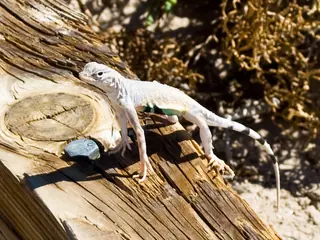 | Zebra-tailed Lizard Callisaurus draconoides Phrynosomatidae | 4.3 in (109 mm) snout to vent | 3% | day | 246 |
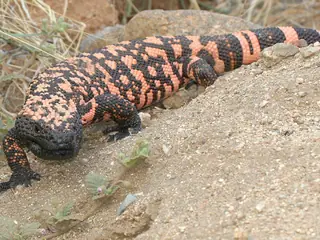 | Gila Monster Heloderma suspectum Helodermatidae | 14 in (362 mm) snout to vent | 3% | day and night | 21 |
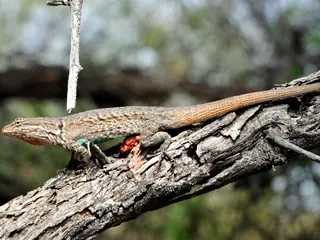 | Long-tailed Brush Lizard Urosaurus graciosus Phrynosomatidae | 2.7 in (68 mm) snout to vent | under 1% | day | 1 |
Share of Utah is the part of the state inside the species' USGS range map. Size is the largest on record where the source gives a maximum, otherwise a typical adult. Records are open-licence observations and specimens in the state; a blank means none were counted, not that the species is absent. "Recorded" marks a species with no USGS range here that open records place in the state (ten or more, in three or more years).
More Utah lists
Other groups in Utah
Lizards in nearby states
Sources
- GBIF Backbone Taxonomy. CC BY 4.0. Read 2026-11-15.
- GBIF occurrence records under CC0 and CC BY 4.0. CC0 and CC BY 4.0 per record. Read 2026-11-16.
- ReptTraits v1.2. CC BY 4.0. Read 2026-11-15.
- US Census Bureau cartographic boundary files 2023. Public domain (US Census Bureau). Read 2026-11-15.
- USGS GAP 12-digit hydrologic unit range units. Public domain (USGS). Read 2026-11-15.
- USGS Gap Analysis Project Species Range Maps CONUS_2001. Public domain (USGS). Read 2026-11-15.
- iNaturalist photographs under CC0 and CC BY. CC0 and CC BY per photograph. Read 2026-11-15.
How each figure is derived is set out on the methods page.