Frogs and toads in Colorado
17 species of frogs and toads have a mapped range in Colorado. The most widespread is the Boreal Chorus Frog, mapped across 99% of the state.
The most restricted is the Wood Frog, mapped in 5% of the state.
The longest is the American Bullfrog, at 8.0 in (203 mm); the shortest is the Northern Cricket Frog, at 1.5 in (38 mm).
The most species are mapped in Otero County (13); the fewest in Clear Creek County (4).
Open-licence records in the state that carry a month (6,314 of them) peak in July and are fewest in December.
The most often recorded is the Woodhouse's Toad, with 1,352 open-licence records in the state.
By the trait records, 5 are active at night, 4 are active by day and by night, 1 is active by day and 1 is most active at dawn and dusk.
They belong to 5 families; the largest here is Bufonidae, with 5 species.
- 4 to 5
- 6 to 7
- 8 to 9
- 10 to 11
- 12 to 13
| Species | Size | Share of Colorado | Active | Records | |
|---|---|---|---|---|---|
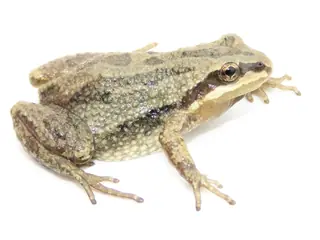 | Boreal Chorus Frog Pseudacris maculata Hylidae | 2.0 in (52 mm) body | 99% | day and night | 1,173 |
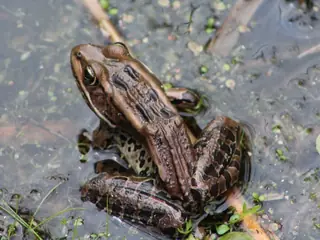 | Northern Leopard Frog Lithobates pipiens Ranidae | 6.5 in (165 mm) body | 95% | 1,253 | |
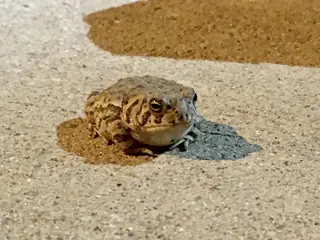 | Woodhouse's Toad Anaxyrus woodhousii Bufonidae | 5.0 in (127 mm) body | 93% | 1,352 | |
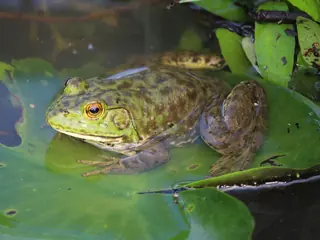 | American Bullfrog Lithobates catesbeianus Ranidae | 8.0 in (203 mm) body | 87% | day and night | 312 |
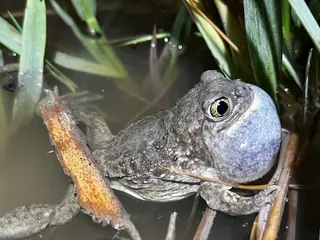 | Plains Spadefoot Spea bombifrons Scaphiopodidae | 2.5 in (64 mm) body | 60% | night | 603 |
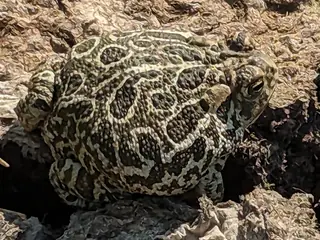 | Great Plains Toad Anaxyrus cognatus Bufonidae | 4.5 in (114 mm) body | 60% | day | 314 |
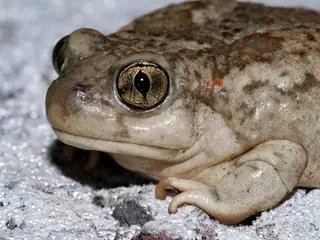 | Mexican Spadefoot Spea multiplicata Scaphiopodidae | 2.5 in (64 mm) body | 45% | night | 99 |
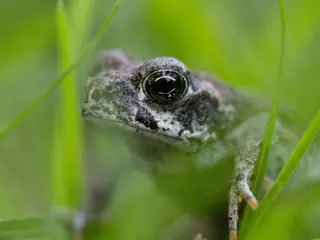 | Western Toad Anaxyrus boreas Bufonidae | 4.9 in (125 mm) body | 38% | dawn and dusk | 885 |
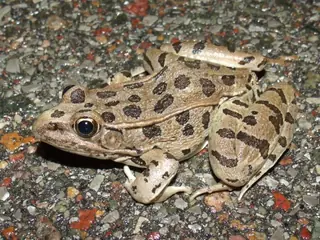 | Plains Leopard Frog Lithobates blairi Ranidae | 4.4 in (111 mm) body | 38% | 284 | |
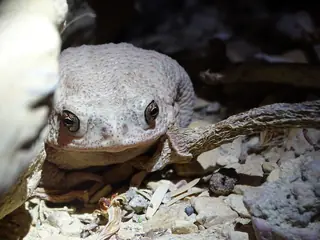 | Red-spotted Toad Anaxyrus punctatus Bufonidae | 3.0 in (76 mm) body | 30% | 107 | |
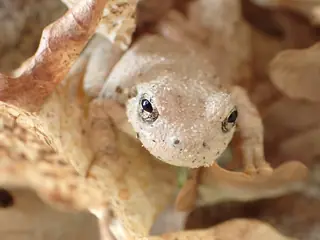 | Canyon Treefrog Dryophytes arenicolor Hylidae | 2.2 in (57 mm) body | 24% | night | 128 |
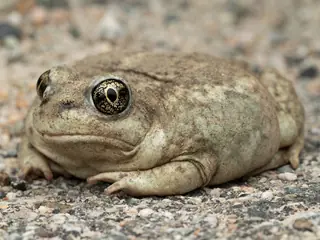 | Great Basin Spadefoot Spea intermontana Scaphiopodidae | 2.5 in (64 mm) body | 19% | night | 31 |
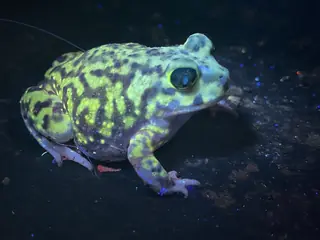 | Couch's Spadefoot Scaphiopus couchii Scaphiopodidae | 3.1 in (80 mm) body | 18% | night | 37 |
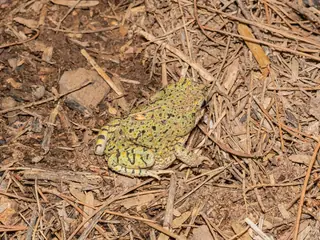 | Green Toad Anaxyrus debilis Bufonidae | 2.1 in (54 mm) body | 13% | 29 | |
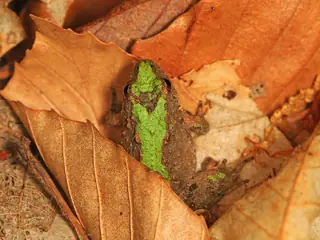 | Northern Cricket Frog Acris crepitans Hylidae | 1.5 in (38 mm) body | 8% | day and night | 33 |
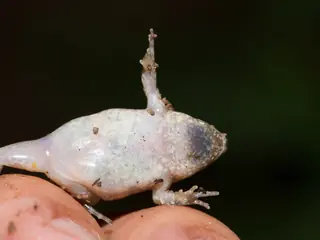 | Western Narrow-mouthed Toad Gastrophryne olivacea Microhylidae | 1.6 in (41 mm) body | 8% | day and night | 7 |
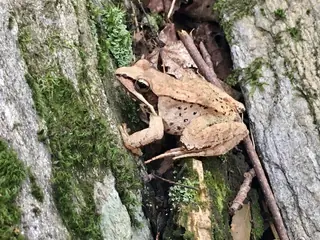 | Wood Frog Lithobates sylvaticus Ranidae | 3.3 in (83 mm) body | 5% | 133 |
Share of Colorado is the part of the state inside the species' USGS range map. Size is the largest on record where the source gives a maximum, otherwise a typical adult. Records are open-licence observations and specimens in the state; a blank means none were counted, not that the species is absent. "Recorded" marks a species with no USGS range here that open records place in the state (ten or more, in three or more years).
More Colorado lists
Other groups in Colorado
Frogs and toads in nearby states
Sources
- AmphiBIO v1. CC BY 4.0. Read 2026-11-15.
- GBIF Backbone Taxonomy. CC BY 4.0. Read 2026-11-15.
- GBIF occurrence records under CC0 and CC BY 4.0. CC0 and CC BY 4.0 per record. Read 2026-11-16.
- US Census Bureau cartographic boundary files 2023. Public domain (US Census Bureau). Read 2026-11-15.
- USGS GAP 12-digit hydrologic unit range units. Public domain (USGS). Read 2026-11-15.
- USGS Gap Analysis Project Species Range Maps CONUS_2001. Public domain (USGS). Read 2026-11-15.
- iNaturalist photographs under CC0 and CC BY. CC0 and CC BY per photograph. Read 2026-11-15.
How each figure is derived is set out on the methods page.