Lark Bunting
Calamospiza melanocorys
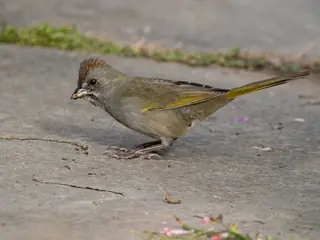
The Lark Bunting (Calamospiza melanocorys) is a bird in the family Passerellidae. USGS maps its range in 13 of the lower 48 states, most widely in Wyoming, where it covers 97% of the state. Adults weigh about 1.3 oz (38 g).
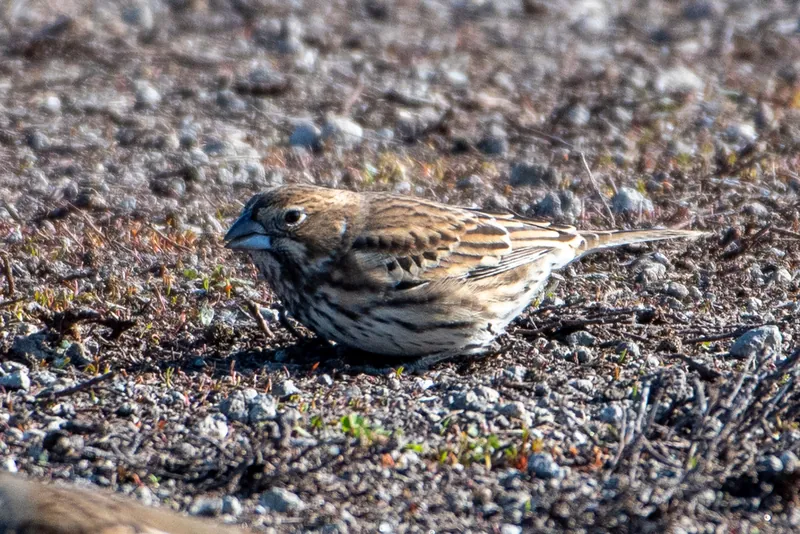
Across most of its mapped range it is a summer bird.
It is active by day. It eats mainly both plants and animals. AVONET classes it as a migrant.
The USGS habitat model maps it across 78 land-cover types. The model places it no higher than 3,960 m (13,000 ft).
Open-licence records from the lower 48 (2,989 of them) peak in June and are fewest in October. A typical clutch is about 4.7. The longest recorded lifespan is 4.8 years.
By size, range and water use in the USGS models, the species most easily taken for it are the Spotted Towhee, the Fox Sparrow, the Lark Sparrow and the Green-tailed Towhee.
Where the Lark Bunting lives
| State | Share of state | Counties | Open records | Peak month |
|---|---|---|---|---|
| Wyoming summer | 97% | 23 of 23 | 187 | June |
| South Dakota summer | 85% | 51 of 66 | 248 | June |
| Texas winter | 81% | 195 of 254 | 656 | November |
| North Dakota summer | 79% | 44 of 53 | 146 | June |
| Nebraska summer | 77% | 64 of 93 | 200 | June |
| Kansas summer | 71% | 71 of 105 | 191 | June |
| Montana summer | 69% | 40 of 56 | 253 | June |
| New Mexico summer | 68% | 29 of 33 | 277 | January |
| Oklahoma | 55% | 42 of 77 | 95 | May |
| Colorado summer | 54% | 37 of 64 | 704 | June |
| Arizona winter | 38% | 10 of 15 | 576 | December |
| Utah summer | 24% | 13 of 29 | 30 | |
| Idaho summer | under 1% | 2 of 44 | 8 |
Share of state is the part of each state inside the range map. Counties counts those with at least a tenth of their area in range. A state link opens that state's full list.
When it is recorded
Species it can be taken for
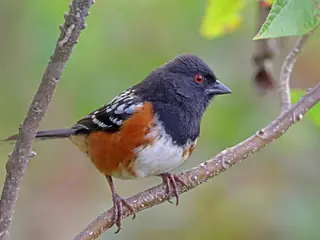
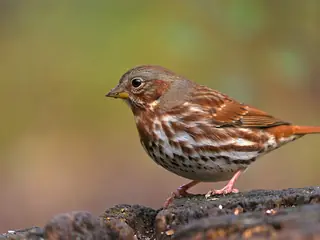
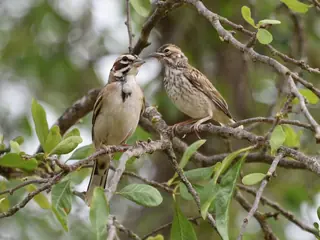
Chosen by rule: the same group, an adult size within 30%, at least one shared state and the same water use in the USGS habitat models. It is a list of candidates, not an identification.
Lists it appears on
Sources
- AVONET: morphological ecological and geographical data for all birds. CC BY 4.0. Read 2026-11-15.
- Amniote life-history database. CC0. Read 2026-11-15.
- EltonTraits 1.0. CC0. Read 2026-11-15.
- GBIF Backbone Taxonomy. CC BY 4.0. Read 2026-11-15.
- GBIF occurrence records under CC0 and CC BY 4.0. CC0 and CC BY 4.0 per record. Read 2026-11-15.
- Integrated Taxonomic Information System. CC0. Read 2026-11-15.
- US Census Bureau cartographic boundary files 2023. Public domain (US Census Bureau). Read 2026-11-15.
- USGS GAP 12-digit hydrologic unit range units. Public domain (USGS). Read 2026-11-15.
- USGS Gap Analysis Project Species Habitat Maps CONUS_2001 (model parameters). Public domain (USGS). Read 2026-11-15.
- USGS Gap Analysis Project Species Range Maps CONUS_2001. Public domain (USGS). Read 2026-11-15.
- iNaturalist photographs under CC0 and CC BY. CC0 and CC BY per photograph. Read 2026-11-15.
How each figure is derived is set out on the methods page.