Salamanders in Oregon
20 species of salamanders have a mapped range in Oregon. The most widespread is the Long-toed Salamander, mapped across 78% of the state.
The most restricted is the Idaho Giant Salamander, mapped in under 1% of the state.
The longest is the Coastal Giant Salamander, at 13 in (340 mm); the shortest is the Larch Mountain Salamander, at 4.1 in (103 mm).
The most species are mapped in Multnomah County (12); the fewest in Baker County (1).
Open-licence records in the state that carry a month (20,636 of them) peak in April and are fewest in January.
The most often recorded is the Rough-skinned Newt, with 4,864 open-licence records in the state.
They belong to 4 families; the largest here is Plethodontidae, with 10 species.
- 1 to 4
- 5 to 6
- 7 to 9
- 10
- 11 to 12
| Species | Size | Share of Oregon | Active | Records | |
|---|---|---|---|---|---|
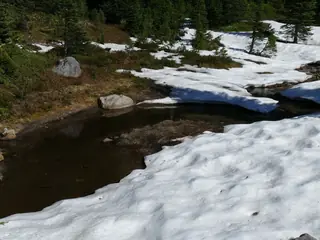 | Long-toed Salamander Ambystoma macrodactylum Ambystomatidae | 9.8 in (248 mm) body | 78% | 2,584 | |
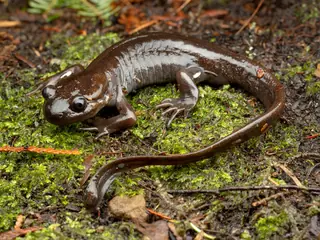 | Northwestern Salamander Ambystoma gracile Ambystomatidae | 8.6 in (219 mm) body | 37% | 815 | |
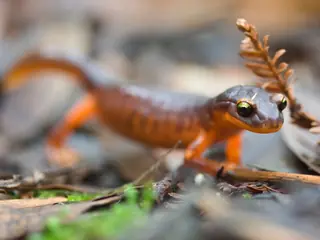 | Ensatina Ensatina eschscholtzii Plethodontidae | 5.9 in (149 mm) body | 33% | 3,031 | |
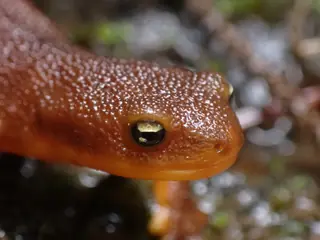 | Rough-skinned Newt Taricha granulosa Salamandridae | 8.5 in (216 mm) body | 33% | 4,864 | |
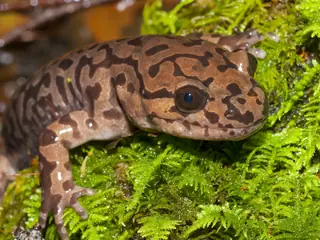 | Coastal Giant Salamander Dicamptodon tenebrosus Ambystomatidae | 13 in (340 mm) body | 32% | 1,015 | |
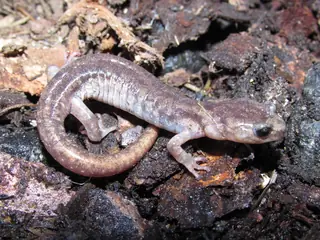 | Clouded Salamander Aneides ferreus Plethodontidae | 5.2 in (133 mm) body | 29% | 2,743 | |
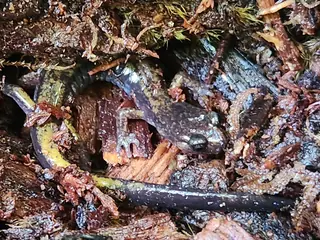 | Dunn's Salamander Plethodon dunni Plethodontidae | 5.9 in (150 mm) body | 28% | 2,161 | |
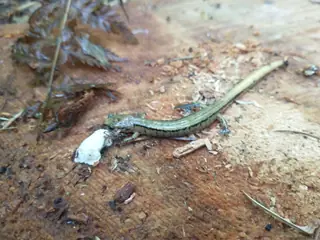 | Western Red-backed Salamander Plethodon vehiculum Plethodontidae | 4.5 in (115 mm) body | 22% | 2,294 | |
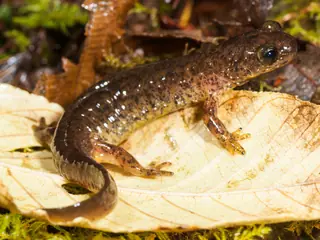 | Southern Torrent Salamander Rhyacotriton variegatus Rhyacotritonidae | 4.5 in (115 mm) body | 13% | 1,136 | |
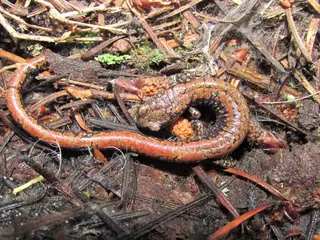 | Oregon Slender Salamander Batrachoseps wrighti Plethodontidae | 4.3 in (108 mm) body | 8% | 650 | |
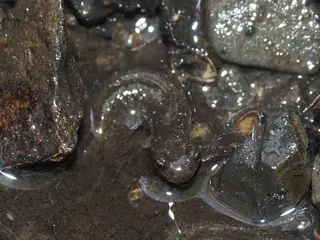 | Cascade Torrent Salamander Rhyacotriton cascadae Rhyacotritonidae | 4.3 in (110 mm) body | 8% | 452 | |
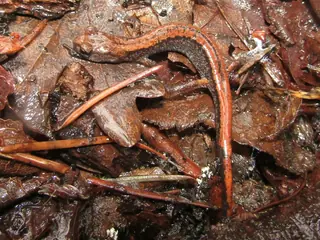 | Larch Mountain Salamander Plethodon larselli Plethodontidae | 4.1 in (103 mm) body | 4% | 125 | |
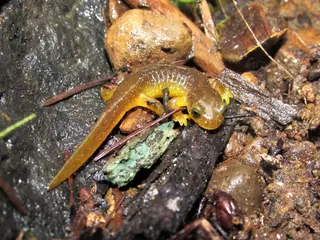 | Columbia Torrent Salamander Rhyacotriton kezeri Rhyacotritonidae | 4.5 in (115 mm) body | 4% | 460 | |
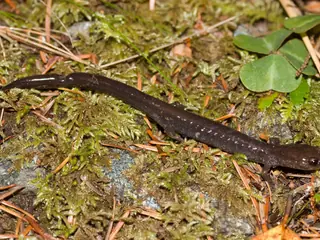 | Del Norte Salamander Plethodon elongatus Plethodontidae | 6.0 in (152 mm) body | 4% | 802 | |
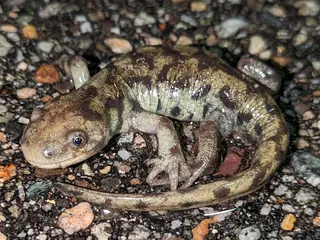 | Barred Tiger Salamander Ambystoma mavortium Ambystomatidae | 0.2 oz (5 g) | 2% | 1 | |
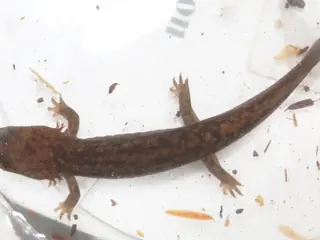 | Cope's Giant Salamander Dicamptodon copei Ambystomatidae | 7.5 in (191 mm) body | 2% | 92 | |
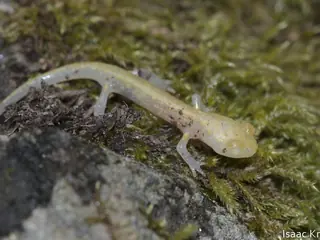 | Black Salamander Aneides flavipunctatus Plethodontidae | 6.6 in (167 mm) body | 2% | 24 | |
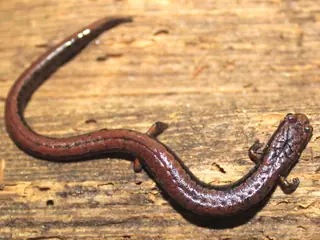 | California Slender Salamander Batrachoseps attenuatus Plethodontidae | 5.5 in (140 mm) body | 2% | 129 | |
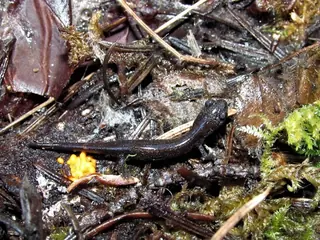 | Siskiyou Mountains Salamander Plethodon stormi Plethodontidae | 5.5 in (140 mm) body | under 1% | 77 | |
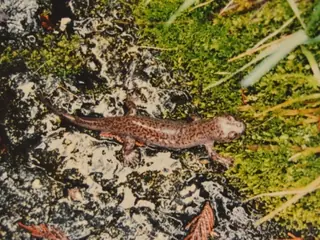 | Idaho Giant Salamander Dicamptodon aterrimus Ambystomatidae | 9.8 in (250 mm) body | under 1% | 4 |
Share of Oregon is the part of the state inside the species' USGS range map. Size is the largest on record where the source gives a maximum, otherwise a typical adult. Records are open-licence observations and specimens in the state; a blank means none were counted, not that the species is absent. "Recorded" marks a species with no USGS range here that open records place in the state (ten or more, in three or more years).
Other groups in Oregon
Salamanders in nearby states
Sources
- AmphiBIO v1. CC BY 4.0. Read 2026-11-15.
- GBIF Backbone Taxonomy. CC BY 4.0. Read 2026-11-15.
- GBIF occurrence records under CC0 and CC BY 4.0. CC0 and CC BY 4.0 per record. Read 2026-11-16.
- US Census Bureau cartographic boundary files 2023. Public domain (US Census Bureau). Read 2026-11-15.
- USGS GAP 12-digit hydrologic unit range units. Public domain (USGS). Read 2026-11-15.
- USGS Gap Analysis Project Species Range Maps CONUS_2001. Public domain (USGS). Read 2026-11-15.
- iNaturalist photographs under CC0 and CC BY. CC0 and CC BY per photograph. Read 2026-11-15.
How each figure is derived is set out on the methods page.